+86 18717921345
(Whatsapp/Wechat)
World-leading provider of boilers and industrial boiler solutions
 +86 18717921345|
 ht@hnhtgf.com|
- Language|

World-leading provider of boilers and industrial boiler solutions
+86 18717921345|ht@hnhtgf.com|
HUATAI 2025-12-23
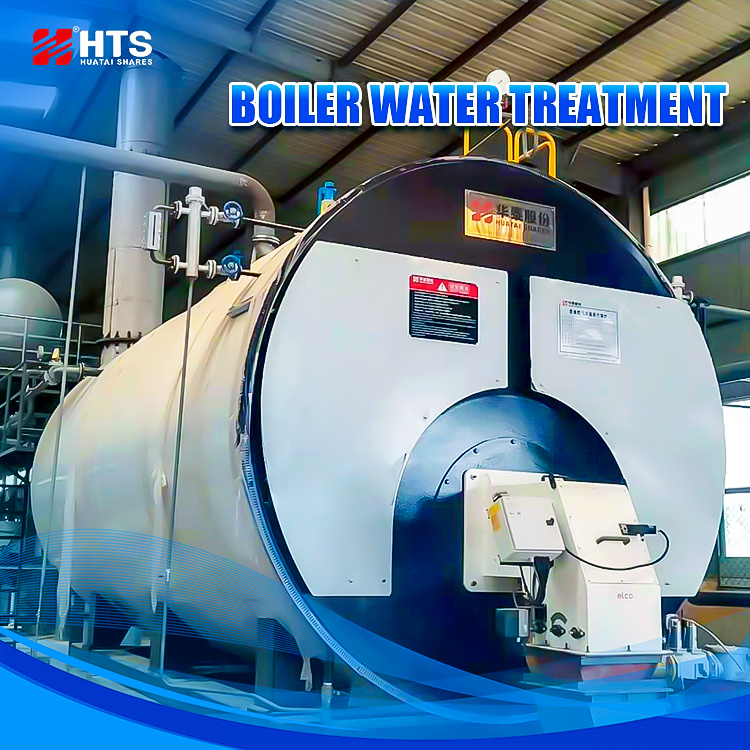
Boiler water treatment can ensure the quality and stability of boiler water,extend the service life of the boiler.
Without it, boiler is susceptible to scaling, corrosion, and microbial contamination, leading to costly repairs and operational downtime.
1.Importance of water treatment
*Prevent scale
Scale occurs when minerals such as calcium and magnesium accumulate on the surface of the boiler.Cause energy consumption and system failure.This not only wastes energy but also creates localized hot spots that can cause tube failures.
*Control corrosion
Corrosion poses a significant threat to industrial boiler integrity, caused by oxygen attack and acidic corrosion.Corrosion can severely damage boiler components, leading to boiler leaks.
*Protect environment
Boiler water treatment reduces harmful contaminants, making it easier to meet regulatory requirements.
*Improve reliability
Boiler water treatment reduce maintenance costs and unplanned shutdowns, ensuring smooth industrial operations.
*Reduced maintenance
Lead to lower labor costs, fewer parts to replace, and less downtime.
Notice: In operation,accord to boiler type, water quality characteristics to select treatment process.
2.Process of water treatment
*Pre-treatment
Coagulation and precipitation: Add coagulants (such as polyaluminum chloride, aluminum sulfate, etc.) to the raw water to form flocculants of suspended solids, colloidal substances, etc. in the water.
Through gravity, the flocculant settles down in the sedimentation tank, removing most of the suspended solids.
Filtration: Remove fine particles and organic matter from the water.Ensure that the water quality is clear and transparent.
*Softening treatment
The softened water can reduce the fouling phenomenon of the inner wall of the boiler and improve the thermal efficiency.
*Deoxygenation treatment
Thermal deaerators: Uses steam to heat water and remove dissolved gases.
Vacuum deaerators: Reduces pressure to aid gas release.
*Chemical treatment
Oxygen scavengers (sodium sulfite) to chemically remove any residual dissolved oxygen.
Alkalinity builders (sodium hydroxide) to maintain a high pH, creating an environment where steel is passive and less prone to corrosion.
Scale inhibitors (phosphates, polymers) that condition precipitating hardness minerals into a non-adherent sludge, which can be removed via blowdown.
Antifoams to prevent foaming and carryover of boiler water into the steam system, which can damage turbines and process equipment.
3.Challenge of water treatment
*Water quality change
Seasonal changes affect the performance of the processing system
*Different type of boilers
High pressure boilers require stricter water quality standards
*Water quality analysis
key parameters includes water hardness, alkalinity, pH level, dissolved oxygen, dissolved carbon dioxide,total dissolved solids, and more.
*pH control
pH control is one parameter to prevent boiler corrosion. Below the recommended pH of your boiler water treatment program, corrosion of the boiler tubes and other components can occur. Above the recommended pH, scale, fouling, and solids carry over in the steam can take place. It’s important to maintain pH level within the recommended range to properly protect the boiler and optimize operation.
*Monitoring and maintenance
Accurate and continuous monitoring of boiler water quality not only protects the equipment, but also helps optimize energy use, reduce operating costs, and enhance system safety. A regular monitoring plan with proper data recording and analysis is essential to ensure the stable and reliable performance of the boiler in various industries.
4.Purpose of boiler water treatment
*Maximize energy efficiency and steam production
*Minimize maintenance and operational costs
*Extend equipment life
*Ensure safe and reliable operation
Conclusion
Industrial boiler water treatment is a non-negotiable practice for asset management.
By removing contaminants that can cause scaling, corrosion, and other operational issues, an effective water treatment system can save energy costs, reduce maintenance, and improve safety.
Online chat Inquiry Let’s have a chat about boilers,Feel free to contact us.
 Tel: +86 18717921345
 Phone: +86 18717921345
 E-mail: ht@hnhtgf.com
 Add: 271 Huanghe Avenue, Xinxiang City,Henan Province, China


Copyright © 2021 Henan Huatai Petrochemical Equipment Co., Ltd
